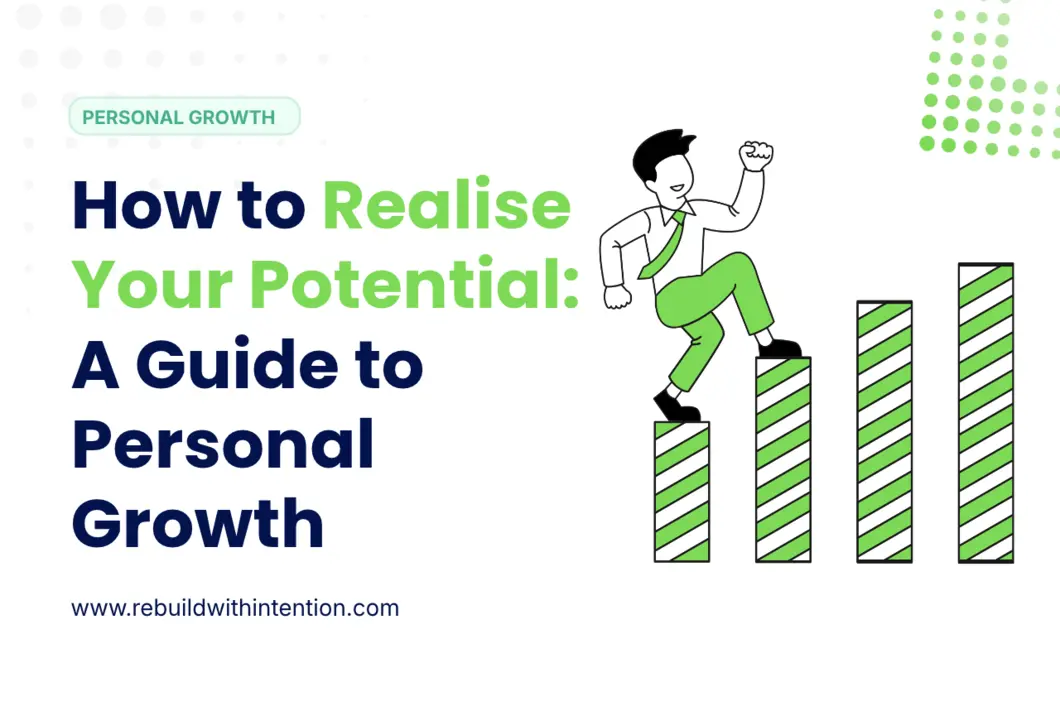
Realising your potential is not about waiting for the perfect moment, discovering a hidden talent or hoping that success will eventually find you. It is a process of understanding your strengths, developing new skills, setting meaningful goals and taking consistent action towards personal growth.
Whether you want to develop your career, build a business, improve your confidence or become a better leader, learning how to realise your potential starts with understanding what you can do today and what you can develop over time.
To begin, identify the activities that energise you, the skills you learn quickly and the problems you enjoy solving. Then, challenge yourself with realistic goals, build habits that support improvement and spend time in environments that encourage learning.
If you have ever wondered, “Do I have potential?”, the answer is not something you need to discover through speculation alone. You can begin to recognise your potential through action, honest self-assessment, feedback and the willingness to keep improving.
This guide explains how to discover your potential, maximise your personal growth, overcome self-doubt and turn your abilities into meaningful progress.
Do I Have Potential?
Yes, you may have abilities and opportunities for growth that you have not fully explored. Potential does not always appear as exceptional talent, outstanding confidence or early success.
It can show up as curiosity, creativity, empathy, discipline, problem-solving ability or a willingness to keep learning when something becomes difficult.
The more useful question is not simply whether you have potential, but where your potential can become useful.
For example, you might have leadership potential when organising people and helping a team achieve a shared goal. You might have creative potential when developing ideas, designing products or telling stories. You might discover business potential when identifying problems that people need solved.
Potential depends partly on context. A person who struggles in one environment may perform exceptionally well in another that better matches their strengths, interests and working style.
Self-awareness helps you recognise these possibilities. Instead of judging yourself only by what comes naturally, pay attention to what improves with practice, which challenges keep your interest and what others consistently value about your contribution.
You do not need to be the best at something before you begin. You need enough curiosity to explore it, enough patience to develop your skills and enough honesty to recognise where improvement is needed.
Is Potential Fixed or Can You Develop It?
Potential is not simply something you are born with and either possess or lack. Although people begin with different abilities, circumstances and opportunities, many capabilities can develop through learning, deliberate practice, feedback and experience.
Three factors can help you understand your potential:
1. Natural tendencies. These include the activities you find interesting, the patterns you notice easily and the subjects you enjoy exploring. They can provide clues about your strengths, but they do not determine your future.
2. Developed skills. Communication, leadership, writing, analytical thinking and many other abilities can improve through education, repetition, coaching and practical experience.
3. Supportive conditions. Your environment, relationships, access to resources and opportunities to practise can influence how effectively you develop your abilities.
Understanding these factors helps you take responsibility for your personal development without assuming that everything is within your control. You cannot choose every circumstance, but you can often choose what to learn, which habits to build and how to respond to feedback.
A growth mindset supports this process by treating abilities as things that can improve rather than as permanent measures of your worth.
The goal is not to become equally good at everything. It is to identify where your interests, abilities, values and opportunities overlap, then invest your effort there.
How Do You Turn Potential into Real Results?
Potential becomes more meaningful when you put it into practice. Thinking about what you could achieve may help you imagine possibilities, but taking action gives you evidence about your abilities and what you need to improve.
Start with a small experiment.
If you want to improve your public speaking, volunteer to present at a meeting or practise a short presentation and record yourself. If you want to develop your writing, publish a piece of work and invite constructive criticism. If you want to explore a career, take a relevant course, complete a project or speak with someone experienced in the field.
The purpose is not to prove that you are already good at something. It is to find out what happens when you make a genuine effort.
Use each experience to answer three questions:
- What did I do well?
- What did I find difficult?
- What can I change the next time?
This process turns experience into learning. Learning helps you make better decisions about where to focus your energy.
Instead of waiting until you feel completely ready, create opportunities to practise, observe the results and adjust your approach.
Action reveals potential. Consistent practice develops it. Reflection helps you direct it.
What Does a Personal Potential Assessment Show?
A personal potential assessment helps you understand your current strengths, development needs, interests, habits and opportunities for growth. It can help you identify patterns in your behaviour and make more informed decisions about your personal development.
However, an assessment cannot determine your entire future or measure your worth as a person. Its value lies in helping you understand yourself more clearly and identify practical next steps.
You do not need an expensive test or complicated personality framework to begin. Reflecting on your real experiences can reveal useful information.
Think about the moments when you felt engaged, capable, challenged or proud of what you accomplished. Consider the situations where you repeatedly struggled, avoided a task or made the same mistake.
Both sets of experiences matter. Your successes can reveal strengths, while your difficulties can highlight skills that need attention, unsuitable environments or habits that are holding you back.
A useful potential assessment should help you answer four questions:
- What are my current strengths?
- Which abilities would I like to develop?
- What obstacles are preventing my progress?
- Which opportunities could help me grow?
The answers provide a starting point for a personal growth plan rather than a permanent label about what you can or cannot achieve.
How Do You Assess Your Own Potential?
A practical self-assessment can help you discover your potential without overcomplicating the process.
Step 1: Identify your strongest experiences
Write down three moments from the past year when you felt capable, energised or proud of your contribution.
For each experience, ask what you were doing, which skills you used and what made the experience meaningful.
Step 2: Examine your challenges
Identify two situations in which you struggled or felt stuck.
Consider whether the difficulty came from a lack of skill, insufficient preparation, low motivation, limited resources or an environment that did not support your progress.
Step 3: Look for recurring patterns
Compare your successful and difficult experiences.
Which activities bring out your best? What kinds of problems do you enjoy solving? Which habits consistently help you perform well, and which ones interfere with your progress?
Step 4: Choose an area for development
Select one or two abilities you want to improve. Avoid trying to transform every area of your life simultaneously.
Choose a specific action you can take within the next seven days, such as completing a lesson, practising a skill or asking someone for feedback.
Step 5: Review your progress
At the end of the week, evaluate what you learned and decide what to do next.
Repeat the process regularly so your understanding of your abilities develops alongside your experience.
Questions to help you discover your potential
Use these self-reflection questions to identify your strengths and opportunities for personal growth.
- Energy: Which tasks engage me, even when they require considerable effort?
- Learning: Which skills improve noticeably when I practise?
- Feedback: What abilities do other people consistently recognise in me?
- Interest: Which problems am I willing to keep working on?
- Discipline: Where am I prepared to make a sustained effort rather than rely on excitement?
- Impact: What can I do that helps others, solves problems or creates value?
Look for evidence rather than answers that simply make you feel good. For example, if several people independently tell you that you explain difficult ideas clearly, communication may be a strength worth developing further.
Questions such as “Do I have leadership potential?” or “Do I have modelling potential?” are best explored through relevant experience, practice, feedback and realistic opportunities.
Self-assessment should help you make better decisions, not restrict what you believe you can become.
What Are the Signs That You Are Underestimating Your Potential?
You may be underestimating your potential if you dismiss your strengths, avoid challenges or assume that early difficulty means you lack ability.
Some signs are easy to overlook because they do not always resemble conventional success.
Common signs of untapped potential include:
- You learn quickly once you understand why a task matters.
- People praise your abilities, but you dismiss their feedback as politeness.
- You feel restless because your current responsibilities no longer challenge you.
- You remain curious about a subject even when you have little experience in it.
- You solve problems for others without recognising that your approach is valuable.
- You compare your beginning to someone else’s years of experience.
- You avoid opportunities because you fear looking inexperienced.
- You repeatedly imagine a different future but rarely take the first step towards it.
These signs do not automatically prove that you have exceptional ability in a particular field. They are reasons to investigate your interests, test your skills and explore opportunities for growth.
Fear can sometimes disguise itself as realism. You may tell yourself that an opportunity is not worth pursuing when the real concern is the possibility of making mistakes or being judged.
To overcome this barrier, make room for being a beginner. Break intimidating goals into manageable tasks, seek feedback from people you trust and treat mistakes as information you can use to improve.
You do not need to eliminate self-doubt before you begin. You need to learn how to act constructively even when some uncertainty remains.
How Much Potential Do You Have?
There is no reliable way to calculate your total human potential as a single number. Your capacity for growth depends on the abilities you develop, the effort you invest, the opportunities available to you and the direction you choose.
You may have more room to grow than your current results suggest, but that does not mean you will excel equally in every field.
A more useful approach is to identify where your interests, strengths, values and opportunities converge.
Ask yourself:
- What kind of work makes me want to improve?
- Which strengths have remained consistent throughout my life?
- Which skills am I willing to practise repeatedly?
- What responsibilities would I like to become capable of handling?
- Which ability could make the biggest difference to my life over the next year?
Then look for practical ways to develop those abilities.
If you want to become a better writer, study effective writing, practise regularly and learn to accept constructive edits. If you want to become a stronger leader, take responsibility, communicate clearly and help other people perform well. If you want to build a business, understand your customers, solve meaningful problems and improve your products or services.
Progress in these areas provides more useful evidence than repeatedly wondering how much potential you possess.
The aim is not to prove that you can do everything. It is to discover what you can do well, what you can learn to do better and where your efforts can create meaningful results.
How Can You Maximise Your Potential Through Consistent Habits?
To maximise your potential, turn your ambitions into routines that support steady improvement.
Motivation can help you begin, but it is rarely consistent enough to carry you through every stage of development. Habits make progress possible even when enthusiasm fades.
Use these five principles to build a sustainable personal growth routine.
1. Choose one priority. Decide which area of your life deserves the most attention right now. Too many competing goals can scatter your effort and make progress difficult to evaluate.
2. Break the goal into skills. Replace a vague ambition with a capability you can practise. Instead of simply wanting to become successful, identify the skills, knowledge or behaviours that would help you move towards that outcome.
3. Practise on a schedule. Decide when and how often you will work on your chosen skill. Regular, focused practice gives you more opportunities to learn than occasional bursts of activity.
4. Track your development. Keep a simple record of completed tasks, practice sessions, lessons learned and feedback received. Visible evidence can help you recognise progress that might otherwise go unnoticed.
5. Review and adjust. At the end of each month, assess what has improved, which obstacles remain and whether your current approach is working. Change your methods when the evidence suggests a better approach is needed.
Protect your attention as well. Constant distraction can make even a worthwhile goal difficult to pursue. Create time for focused work, reduce unnecessary interruptions and make your important habits easier to maintain.
The purpose of these routines is not to make every day perfect. It is to create a reliable process that helps you improve over time.
Personal growth becomes more manageable when you stop relying entirely on how motivated you feel and start building systems that support the person you want to become.
How Does Your Environment Affect Your Potential?
Your environment can influence your confidence, habits, opportunities and ability to perform.
You may struggle in a setting that offers little support for your strengths, yet perform much better when you have the resources, encouragement and responsibilities needed to develop.
This does not mean that your circumstances determine everything or that you should blame other people for your difficulties. It means that personal development involves examining both your own behaviour and the conditions surrounding it.
Consider the difference between an environment where effort is mocked, learning is discouraged and responsibility is avoided, and one where people exchange feedback, share knowledge and encourage improvement.
The second environment can make it easier to practise new skills, learn from mistakes and maintain higher standards.
Evaluate your surroundings by asking:
- Do the people around me encourage growth and personal responsibility?
- Can I learn from someone with more experience?
- Does my daily routine leave room for focused practice?
- Does the content I consume inspire useful action or encourage unhelpful comparison?
- Do I have a safe way to test ideas and learn from mistakes?
Sometimes, the most effective way to unlock your potential is to change your inputs.
Read material that deepens your understanding, spend time with people who take learning seriously and join a class, team, professional community or group that supports your goals.
You may not be able to change every part of your environment immediately. Start with the areas you can influence, and build from there.
How Does Responsibility Develop Leadership, Creativity and Confidence?
Leadership, creativity and confidence become stronger through practical experience and responsibility.
You can imagine becoming a capable leader, creative professional or confident communicator, but these qualities develop more meaningfully when you put them into practice.
Leadership potential
Leadership potential often appears when you take initiative, help others understand a goal, make thoughtful decisions and accept responsibility for outcomes.
You do not need a formal title to begin developing leadership skills. You can volunteer to coordinate a project, help resolve a problem or take ownership of a task that matters to a team.
As your experience grows, pay attention to communication, judgement, accountability and your ability to learn from mistakes.
Creative potential
Creative potential develops through making, experimenting and improving ideas.
If you are interested in design, writing, storytelling or another creative field, produce work regularly. Study examples of effective work, test different approaches and seek constructive feedback.
Creativity is not limited to having original ideas. It also involves developing those ideas into something useful, meaningful or valuable.
Confidence and self-belief
Confidence becomes more grounded when you have evidence that you can handle challenges.
Every time you prepare for a task, follow through on a commitment or recover from a mistake, you gain experience that can strengthen your self-belief.
If you want to realise your potential in any of these areas, take on a meaningful responsibility, ask a knowledgeable person to review your work or volunteer for an opportunity that stretches your current abilities.
Potential becomes easier to recognise when you give it something concrete to do.
How Do You Keep Growing When Progress Is Slow?
Personal growth does not always produce immediate or visible results. You may spend weeks learning a skill before your improvement becomes obvious, or work towards a goal without receiving much external recognition.
The challenge is to continue learning without assuming that slow progress means failure.
Start by collecting small wins. Record completed tasks, improvements in your technique, difficult conversations you handled better or habits you maintained consistently.
These milestones help you recognise development that might be difficult to see when you focus exclusively on the final outcome.
It is also important to distinguish between a lack of progress and a lack of immediate results. You may be improving your skills even when the external reward has not arrived. At the same time, repeated lack of progress can be a sign that you need better methods, more feedback or a different strategy.
Review your approach honestly.
Ask yourself whether you are practising the right skill, receiving useful feedback and giving yourself enough time to improve. If necessary, seek guidance from someone with relevant experience.
Remember that confidence does not always precede competence. Often, it develops as you practise, face difficulties, learn from the experience and become more capable.
Patience helps you stay committed, while reflection ensures that your commitment leads to learning.
How Do You Run a 30-Day Potential Development Experiment?
A 30-day experiment is a practical way to discover your potential in a specific area without attempting to change your entire life at once.
Instead of making a broad promise to become a better version of yourself, choose one ability and test what consistent effort can achieve.
Week 1: Choose your area of growth
Select a specific skill or ability, such as public speaking, writing, fitness, leadership, sales, design, coding or teaching.
Define what improvement would look like after 30 days. Your goal should be realistic and measurable.
For example, you might aim to complete four writing exercises, record five practice presentations or finish a beginner project.
Week 2: Practise consistently
Set aside dedicated time to work on your chosen skill. Focus on learning the fundamentals and completing practical exercises rather than waiting to feel confident.
Keep a brief record of what you practise and what you find difficult.
Week 3: Seek feedback and improve
Ask a mentor, teacher, manager, coach or knowledgeable peer to review your work, if someone suitable is available.
If external feedback is not available, review your own work carefully, compare it with credible examples and identify one specific improvement to make.
Use the information to adjust your practice.
Week 4: Review your progress
Evaluate what you learned during the month.
Consider what improved, which challenges remained and whether the work itself continued to interest you.
Then decide whether to continue developing the skill, change your approach or explore a different area.
The experiment is valuable even if you discover that a particular path is not right for you. You have gained information that can guide your next decision.
A structured 30-day plan turns the abstract idea of potential into a practical process of experimentation, learning and personal growth.
What Mindset Helps You Realise Your Full Potential?
An effective mindset combines optimism with honesty.
You need enough belief in your ability to improve to attempt difficult things, but you also need the willingness to recognise your current limitations and respond to feedback.
This balance is more useful than blind positivity or constant self-criticism.
A constructive growth mindset includes beliefs such as:
- I can improve at this through practice and better methods.
- Feedback gives me information I can use.
- My first attempt does not determine my long-term ability.
- Consistent effort matters more than temporary motivation.
- I can respect my current limits while working to expand my capabilities.
- Changing my approach is a form of learning, not an admission of defeat.
A growth mindset does not mean that every goal is achievable or that effort alone guarantees success. It means being willing to learn, adapt and make informed decisions about your next steps.
When progress is slow, examine your methods before making assumptions about your ability. When a strategy fails, identify what the experience has taught you. When you succeed, recognise the behaviours and conditions that contributed to the result.
This approach helps you build self-awareness, resilience and a more realistic sense of what you can achieve.
How Can You Start Realising Your Potential Today?
You do not need a complete life plan before taking your first step. Start with one action that moves you towards the person you want to become.
If you want to become more disciplined, keep one small promise to yourself today. If you want to become more creative, finish a piece of work. If you want to develop leadership skills, take responsibility for improving a situation. If you want to change careers, identify one relevant skill to learn or one opportunity to explore.
Choose an action that is small enough to complete but meaningful enough to create momentum.
Then repeat the process. Practise, reflect, seek feedback and adjust your approach as you learn more about yourself.
Over time, these actions provide evidence of your development. You become less dependent on reassurance because you can see what you are learning, what you are improving and what you are capable of handling.
You may not know your full capacity yet, and you do not need to know it all at once.
Realising your potential is an ongoing process of discovering your strengths, developing your skills, making deliberate choices and creating opportunities for growth.
Your potential is not just something to imagine. It is something to explore, develop and put into practice.
Start where you are, work with what you have and take the next meaningful step.
Frequently Asked Questions About Realising Your Potential
What does it mean to realise your potential?
To realise your potential means to develop and use your abilities, strengths and skills in ways that help you achieve meaningful goals. It involves self-awareness, learning, consistent practice and taking advantage of opportunities for personal growth.
How can I discover my hidden potential?
You can discover your potential by examining your strengths, interests, past achievements and recurring challenges. Try new activities, develop practical skills, seek constructive feedback and observe where you improve with practice.
How can I maximise my potential?
To maximise your potential, focus on your most important goals, build habits that support progress, practise relevant skills consistently and learn from feedback. Choosing supportive environments and reviewing your progress can also help you make better decisions about your development.
Can anyone develop their potential?
People have different abilities, circumstances and opportunities, but many skills and capabilities can improve through practice, education, experience and support. Personal development is about identifying realistic opportunities for growth and making the most of them.
What is the difference between potential and performance?
Potential refers to capabilities you may develop or demonstrate under suitable conditions, while performance describes what you actually do in a particular situation. Performance provides evidence about your current abilities, but one result does not necessarily define your long-term capacity to improve.
How long does it take to realise your potential?
There is no universal timeline. Some skills improve noticeably within weeks, while complex abilities and long-term goals may require years of learning and practice. Progress depends on the skill, your starting point, the quality of your practice and the opportunities available to you.
What is the first step towards reaching your full potential?
Start with honest self-assessment. Identify one strength to develop or one ability you want to improve, set a realistic goal and take a practical step towards it. Use what you learn to guide your next action.
The most important thing is to begin, keep learning and give yourself opportunities to grow.
Discover more from Rebuild With Intention
Subscribe to get the latest posts sent to your email.