Here’s a question I ask myself now with anyone I’m getting close to: If nothing romantic ever happens between us, will I still be okay?
I didn’t always ask that. I learned to the hard way, and I want to walk through how.
Three or four years ago, I had a disagreement with my girlfriend that ended our relationship. She wanted to stay friends, but I wanted to disappear—or at least stay far enough away that I wouldn’t have to feel what I was feeling.
Going from the intimacy we’d had back down to “just friends” wasn’t a small adjustment for me. It was a demotion my brain and my emotions couldn’t fathom. I didn’t have the language for that reaction at the time. I just knew I’d rather lose her completely than sit across from her as just a friend.
If there’s one thing I’ve studied about my own wiring, it is this: when I talk to a woman for a long time, my brain starts to familiarize itself with her, forms a bond, and then starts developing feelings.
For a long time, I called all of that love. It wasn’t. It was usually one of a handful of other things wearing love’s clothes. Plain communication is enough to produce any of them because talking builds trust, and trust is what makes a heart feel close to someone.
Real intimacy and passion with no label and no commitment attached.
An early, intense pull built more on idealizing someone than actually knowing them.
An involuntary, almost obsessive craving to have your feelings returned. It feels exactly like love from the inside, while actually centering on your own need for reassurance instead of the other person’s wellbeing.
A full emotional-affair-style bond built through disclosure with none of a relationship’s actual structure.
Mostly banter and charge with neither person expecting more.
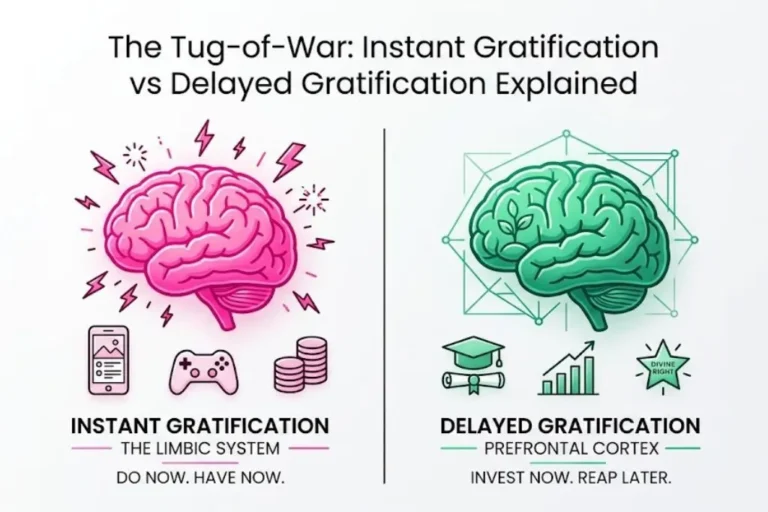
Underneath all of it are three separate systems mapped in the brain:
- Lust
- Attraction
- Attachment
The raw, biological craving for sexual gratification, completely separate from emotional safety.
The high-energy, focused pull toward one specific person. It feels like excitement, not necessarily longevity.
The deep, calming bond that consistent closeness and time produce entirely on their own.
They don’t arrive in order, and it’s easy to mistake one for another, especially if nobody ever taught you the difference.
That confusion is a large part of what sat underneath my instinct to keep my distance from female friendships for years. I was afraid of feeling something I hadn’t agreed to feel, and afraid of having to say it out loud once I did.
I used to have this philosophy: if I couldn’t see where a friendship with a woman was going, spending time on it felt like a bad trade. I was a lonely guy with needs, giving my time to someone with nothing coming back to me for it. I figured I’d rather meet my own needs privately and get back to work.
In my experience—and in a lot of conversations I’ve had with other guys—that wiring isn’t rare. It doesn’t mean men are incapable of real friendship. It just means a lot of us were never taught to separate closeness from opportunity, so we default to reading them as the same thing.
Rebuilding is what actually changed this for me. I got a lot more deliberate about paying attention to my own feelings and what was happening around me. I started defining every new feeling as it came up instead of letting it sit there unnamed.
Somewhere in that process, I learned that people aren’t meant to be alone… For me, being alone creates an emotional gap, and I’ve found that nothing else fully closes it except my relationship with God.
Catholic priests and nuns are proof of that to me. These are men and women who never marry or have sex, yet the gap doesn’t stay open for them because they’ve filled it with total devotion to God instead. Everything else, every friendship and every relationship I build, is meant to be lived inside that, not used to replace it.
That belief is what made the next trap visible.
Two people rebuilding at the same time will often find each other, and it feels like relief: someone who relates, someone you can lean on without being judged. It can genuinely help both people heal, but it can also backfire fast without boundaries. The reason is simple: relying on someone else while you’re rebuilding is still a form of dependence, no matter how healing it feels in the moment.
The research on rebound relationships makes a similar point. Reaching for someone new can genuinely help a person recover from a breakup, but only if it doesn’t become a way to avoid the harder, slower work of actually processing what happened.
The difference was never whether I connected with someone new; it was whether I was leaning on them instead of doing my own healing, or alongside it.
This is where men especially need to slow down, because women are not puzzles to be solved. There’s no “figuring a woman out.” You learn a specific woman by listening to her and staying curious, over time.
Women don’t all want the same thing from a connection. It could be healing, friendship, or genuine romantic interest, and time plus boundaries are what eventually show you which is which. Assumption is the enemy on both sides.
Assumption often stems from the fact that we don’t process pain the same way. Linguist Deborah Tannen spent years studying gendered communication, and one finding maps exactly onto this dynamic: women tend to use conversation for closeness, sharing details as a way of feeling less alone, while men tend to use conversation to exchange information, processing more through action or silence than through talking out loud.
When a woman shares “every little thing” with you, it can feel like she’s building intimacy with you specifically. For her, it might just be how she stays sane that day. Reading her processing style as a romantic signal is one of the fastest ways to misread a friendship, and it’s exactly the mistake I used to make.
So, here’s what I actually do with all of this now.
If the honest answer is no, that means whatever I’m calling a friendship is carrying a hope I haven’t said out loud. And unspoken hope is where most of this confusion actually lives.
It sounds simple, but it does more work than almost anything else I’ve found. It shows maturity, respect, and gives both people absolute clarity so nobody is left guessing, protecting whatever rebuilding each of you is in the middle of.
If I could go back to the day of that breakup, this is the version of me I’d send. Not the one who ghosts to avoid feeling a demotion, and not the one who clings to intimacy out of fear of being alone. I’d send the one who asks the honest question, sets the plain boundary, and trusts God with the parts boundaries can’t fix.
Enjoy people without feeling entitled to them. Stay aware of your own emotions instead of outsourcing them. Don’t assume you’re both feeling the same thing unless you’ve actually said so out loud. Respect each other’s time.
Remember that the point of rebuilding was never to swap one coping mechanism for another. It was to depend fully on God and learn to give love without needing it handed back—looking at things from His perspective instead of my own lens, or anyone else’s.
Most people who hurt others are wounded people still looking for somewhere to put their pain. That is worth remembering before you take anything personally. There’s no perfect person waiting on the other side of any of this, so get familiar with people’s imperfections early, instead of waiting for one to break your heart to teach you that lesson.
We can’t do without each other. That part isn’t gender-specific; we all need each other in every sense that word can carry. But needing each other and depending on each other were never the same thing.
The whole point of rebuilding with intention is learning to focus on what is actually mine to control—knowing that people, including myself, will always be the hardest part of that equation.
Discover more from Rebuild With Intention
Subscribe to get the latest posts sent to your email.