I was staring at a notebook I had written ten years ago, completely suffocating under the weight of my own stagnation. I saw the exact same goals staring back at me—goals I have yet to achieve today.
For a decade, absolutely nothing in my life had grown except my age.
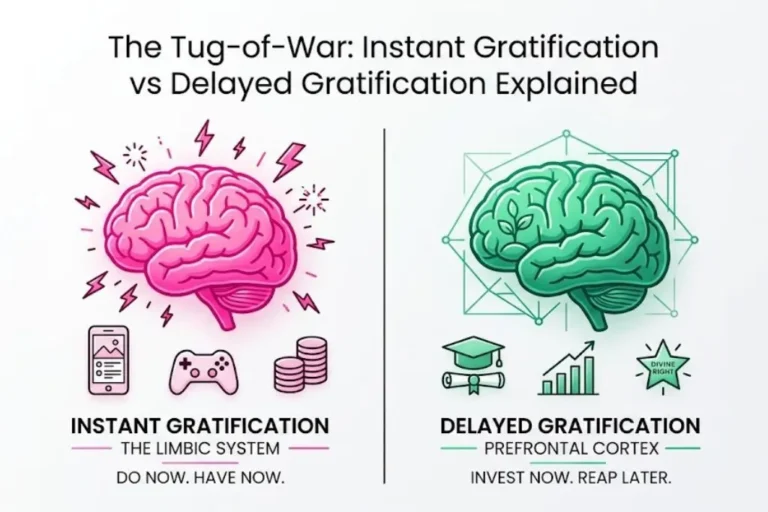
I was trapped in an endless loop of cheap dopamine, trading my infinite potential for temporary escapes.
I know the agonizing guilt of making a firm resolution—when moving to a new apartment or buying a new laptop—only to fall back into the exact same norms weeks later, completely forgetting my commitment.
But I also learned that guilt is not a strategy.
In this article, I’m breaking down the exact mental framework and unbreakable tracking system I used to stop merely “quitting” and start rebuilding my life with intention.
Quitting is Just Minimalism (You Must Add Purpose)
I’ve seen a lot of people wanting to “quit habits” that no longer pay them. I started with this mindset too, but I quickly realized I was building on the wrong foundation.
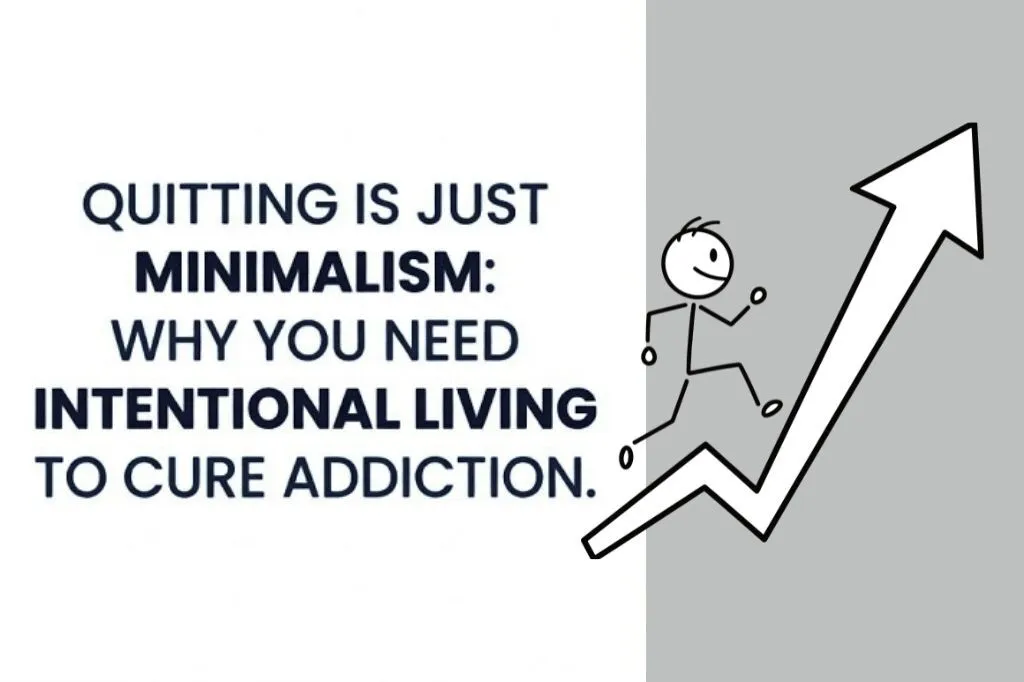
Quitting, in isolation, is just a minimalist exercise; you must add a purpose to stay sober.
It is incredibly easy to declare you won’t consume adult content right after a relapse, or that you won’t binge media after an 18-hour marathon.
But what happens when the boredom creeps back in? What exactly will you do when you are feeling those strong physical urges again?
You cannot simply eliminate a deeply grooved vice; you must actively overwrite it by introducing a structurally superior habit.
Attach your discipline goals directly to a brand new vision of who you are, rather than tracking arbitrary timeline milestones.
Build an unyielding system boundary that refuses to sacrifice your future self for a brief moment of cheap validation.
Making a lasting, strong decision or commitment on a temporary feeling is just like writing, scribing on the ground beside the oceans; it’s only a matter of time before the ocean washes it away.
Guilt, regret, and shame are temporary feelings, and so are the urges themselves. You cannot quit if your only driving force is guilt.
Addiction is not just about the act of quitting; you must ruthlessly identify the sole reason why this habit is no longer paying you, why you actually desire a change, and who you truly want to become.
Time is Your Only True Currency
I was addicted to what I consider the most dangerous habit in the universe. It is the most dangerous because it actively denies the existence of time and purpose.
On the outside, it seems harmless, like a norm in our society. In addition, it is medically recommended, makes you feel courageous, feels incredibly good, is easy to do, and doesn’t cost a dime.
But on the inside, addiction to porn was a completely different story. I was losing my mind, my purpose, my time, my will, my vision, and my life.
Categorically, this lust was so dangerous that it became a standard norm in my daily life. Eventually, even life itself became meaningless to me.
Time is the only true currency we possess in this world, and addiction is systematically taking that away from us. Among other things;
- We need time to become “great” in life.
- We need time to build something meaningful out of our lives.
- We need time to grow.
- Our brain fundamentally needs time to think.
This realization alone is the core mind shift. Because now you know that this battle is no longer about just quitting an addiction but violently taking your time back and using it intentionally.
Time is infinite, yet we never have enough of it. Time lost cannot be recovered. It takes only the grace of God to regain what has been lost over time.
When I ought to have been building, I was enjoying my cheap dopamine as if I had arrived. You do not want to plant when you are supposed to be reaping.
Now that I ought to be reaping, I am building.
The Trinity of the Mind
I don’t just want to “quit” a habit that has kept me stagnant; I want to grow into a man who lives with purpose.
Everything starts from your mind; before you act or speak, you have thought about it a thousand times.
To start living with intention, you have to understand the operating system you are working with. You must understand the trinity of the mind.
Reading this very post means you are currently in your conscious state. A person living with purpose doesn’t live through the subconscious, but the conscious.
The superconscious mind is the god-mind, human intuition, what we refer to as gut-feeling, and the infinite intelligence talking to you.
Your subconscious mind works on autopilot. It handles the actions you no longer need to think about—taking a step, scrolling for hours, or stopping things from entering your eyes.
You already do them before you even think about this.
Our primary target is the subconscious mind.
We start feeding our subconscious mind from the age of three to seven. And this shapes our lives because we act like our minds. We are our mind. It is from this time that most seeds of addiction are sown.
Your subconscious is what defines what you are capable of, not your brain, and it’s strictly based on “what it has seen you do.” It tells you what is possible and what is not.
It will tell you that you can’t do without your phone, that you can’t go a whole day without food, and that you can’t do without adult content.
It takes over when you are sleeping, when you are idle, when you are weak, or when your brain needs rest. It knows and studies patterns, what you do when you feel certain things, and then does it for you.
Recognizing that your subconscious is the main engine behind your addiction is the first step to recovery. Because that is what you need to work on.
Guilt is a Terrible Foundation for Change
Mindset is everything. You must build an iron mind.
I learned a vital concept about building an Iron Mind from Andrew Tate.
This concept is about creating a villain version of yourself and becoming the hero of your story. His principle is so valid because it is what movies are built around. A strong villain and a weak hero.
Even after finding so much meaning in this principle, it was still kind of overwhelming for someone like me staring at an undefeatable enemy that already has everything I desire.
But I also learned from the ancient book to “guide my mind with all diligence (with intention), for out of it flow the issues of life”.
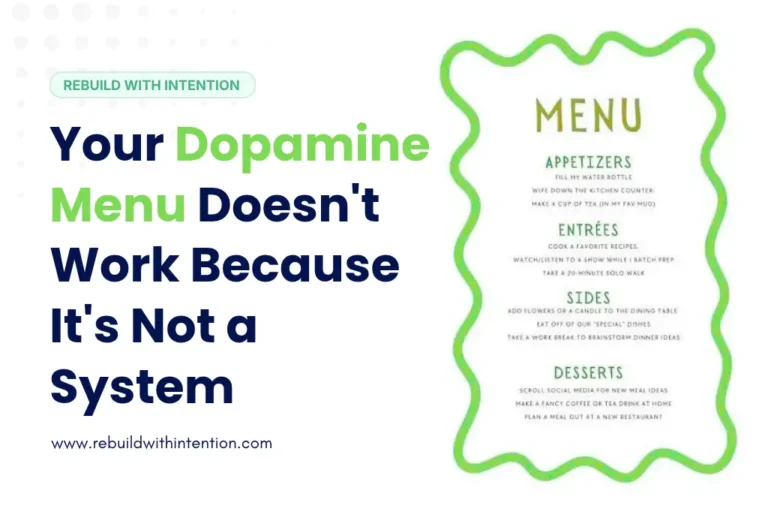
You can’t remove a bad habit from your life, but it can be replaced with another habit. A healthy habit.
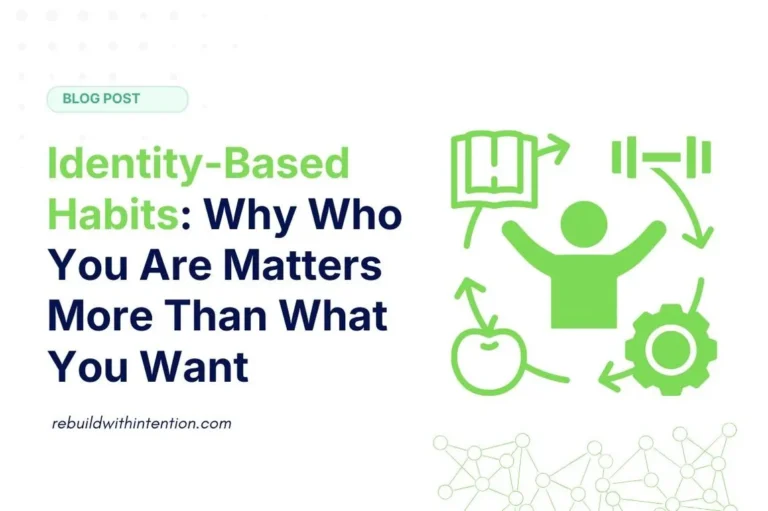
We must actively feed this subconscious what we want it to see. Having a new identity tricks your subconscious into seeing things differently.
The “One Day” Strategy to Unbreakable Consistency
Looking at a lifetime of sobriety is terrifying. The secret is shrinking the battlefield. You do not need to worry about tomorrow; let tomorrow worry about itself while you focus entirely on today.
The goal is to survive just one day. Because if you can survive one day, you can survive a year.
All my past experiences have built my unbreakable system, which I used today to keep living with intention.
How do you win today? Through routine. Starting with a system audit.
The 3-Part System Audit
You no longer feed it the visuals you fed it before (social media, videos, games); replace them with what you want it to replay for you.
You change where you hang out (both online and offline) and who you follow, replacing them with people who help you reach your dream.
Search for the habits, skills, and principles of the person who has succeeded in what you are becoming, and learn all of it.
The bottom line is you want to research the habits, skills, and principles of the people who have succeeded in what you want to become and feed this new information to your subconscious through a daily routine.
When someone asks you what your discipline is, you tell them what you study in school. Same as rebuilding your life.
Life in the real school, and only people with purpose come out in flying colors.
Once you complete your system audit, the next step is engineering your daily habit.
My strategy to win the day is centered entirely on macro goals that are super easy to do and don’t take much time.
A macro goal is not a vague promise to “be productive.” It is a precise, binary task.
It is a simple 1 or a 0. You executed it, or you didn’t.
Checking off all the goals you set to achieve today is the best way to live your day without regret.
These goals are what form your routine, what compounds into the person you are becoming, and what makes you stop fighting addiction (stop fighting yourself), be at peace, and start living a purposeful life.
The goal is one day. This is how I live my day.
I don’t worry about streaks or preparing against the day I will relapse. I know if I don’t feed myself explicit imagery or live my life mindlessly, I won’t even need to fight.
There are still some physical triggers and temptations. I overcome these by talking out loud to distract my subconscious mind from wandering off into giving me all those pictures I don’t want to see. But most of the time, I listen to soul music on repeat and write a thought-provoking journal entry to feel better.
Final Thought
Life is not complex; we make it complex. In everything we do, being at peace with ourselves is the utmost gift we can give to ourselves.
After you have decided what you invest in and decided to take back your time, it’s time to start living that life by investing your time in achieving your goals.
Waking up every day without regret. Having something to live for. A loving family, a mentor, a teacher, a person of purpose, treated with respect. Someone who helps, who creates, who invents.
Acknowledging that one day we will leave this world, and it’s now left to us if we want to make an impact or want to be forgotten completely.
Decide now what you will feed your mind. Decide now on the daily routine you need that helps build the future you want. Stop letting temporary urges wash your dreams away.
Take back your time and start living with intention.
Discover more from Rebuild With Intention
Subscribe to get the latest posts sent to your email.