A habit tracker records what you did. A journal helps you reflect on what was happening around it. Used together, they help you turn your quantitative check-marks into a qualitative feedback loop for continuous self improvement.
In other word, when you use a habit tracker and journal together, they can help you keep a record of your actions, notice patterns, and decide what you may want to adjust.
My process has three parts:
- I check off small actions in a phone task list during the day,
- write about my day in a journal at around 9 p.m., and
- update my spreadsheet tracker while I’m writing.
Later, I compile journal entries and use AI to group them by theme so I can review patterns.
This is the routine that works for me, and it can work for you too.
Why use a habit tracker and journal together?
A tracker gives you a simple record of whether you completed an action. A journal gives you space to add context, such as what happened that day, how you felt, or what made the habit easier or harder.
For example, a tracker might show that you missed your planned morning routine. It cannot tell you why. A journal entry may help you remember that you went to bed late or had an unusually busy morning.
That context can give you something to consider when adjusting your plan, although it does not prove that any one factor caused the miss.
There is research support for recording progress. A meta-analysis of 138 studies involving 19,951 participants found that interventions encouraging people to monitor their goal progress had a positive average effect on goal attainment.
Effects were larger when progress was physically recorded or reported. The study did not test journaling alongside a habit tracker, so think of it as support for monitoring in general, not proof that this particular routine works for everyone.
My daily habit-tracking and journaling routine
I do not start my morning by opening my spreadsheet. I use a task list on my phone to keep track of small actions, and I check each one off as I complete it. Sometimes I use pen and paper instead. I enjoy the feeling of marking a task as done.
One example is my 100-pushup goal. To make is stupid simple, I break it into smaller sets. I do sets of 20 and sometimes use sets of 25. When I finish a set, I check it off in my phone task list.
In the evening, at around 9 p.m., I write about my day, including what I did from the morning onward and how I’m feeling. If I feel like there is nothing to write, I write that down too. While journaling, I open my spreadsheet and log my tasks.
Later, I compile my journal entries and ask an AI tool to sort and group them by theme. That gives me another way to look for recurring patterns and think about what I may want to focus on next.
I still review the original entries to see whether the suggested themes make sense. A summary can help organize my reflections, but it does not prove why something happened or provide a diagnosis.
| Part of my routine | What I do | What it’s for |
|---|---|---|
| During the day | Check off each completed set or action in my phone task list | Keep a quick record without opening my spreadsheet |
| Around 9 p.m. | Write about what happened during the day and how I feel | Reflect on the day in my own words |
| While journaling | Update my spreadsheet with completed tasks | Keep a broader habit record |
| When I compile entries | Use AI to group journal entries by theme, then review them myself | Help me look for patterns and decide what to consider next |
This is how my routine looks like and you don’t have to copy it. What matters is having a simple way to record your actions and a separate opportunity to reflect.
How to remember to log your habits
It can help to decide when you will record an action before you start. Some people may prefer to log immediately after completing a habit. I check off smaller actions during the day and move the spreadsheet update to my evening journaling time.
A related planning idea in James Clear’s guide to habit stacking and BJ Fogg’s Tiny Habits method is to connect a new action to an existing routine.
This specific “when this happens, I’ll do that” plan is called an implementation intention.
Keep the first record simple. If opening your spreadsheet after every action feels like too much work, try a phone check-off or paper mark, then transfer the information later if you still want it in a spreadsheet.
A simple tracker-and-journal template
Use this as a starting point. Change or remove any field that feels unnecessary.
A Simple Tracker-and-Journal Template
Use this as a starting point. Change or remove any field that feels unnecessary.
| Habit or action | What counts as done? | Daytime check-off | Evening note | Possible next adjustment |
|---|---|---|---|---|
| [Name the habit] | [Write a clear, realistic target] | [Mark complete, missed, or not recorded] | [What happened? How did I feel?] | [What, if anything, might I change?] |
| Habit or action | What counts as done? | Daytime check-off | Evening note | Possible next adjustment |
|---|---|---|---|---|
| Pushups | Complete a planned set | Check off each set in my phone task list | Note how the morning went | Adjust when or how I break up the sets |
The template separates the quick task check-off from the more reflective note. If you use a spreadsheet, you can log the daily total or the completed sets there, depending on the level of detail you actually want to keep.
I create a template you can easily use for this.

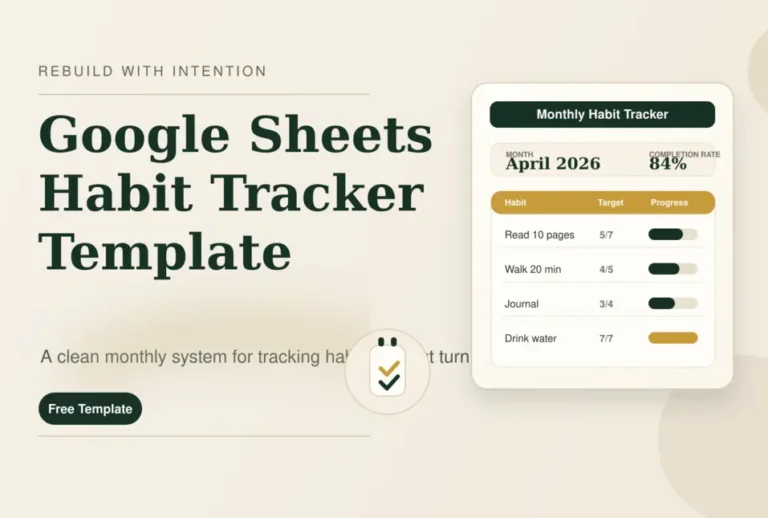
Click here to copy our free google sheet habit tracker and journal template.
How to review your tracker and journal
My regular routine is to write and update my spreadsheet in the evening, then compile journal entries for theme-based review. If you would rather check in weekly, set aside a short time to look at your tracker and notes together.
Questions you could ask include:
- Which actions did I record completing?
- Which did I miss or forget to record?
- What was happening around the times I missed them?
- Did a cue, time, or existing routine make an action easier to remember?
- Is my target clear and realistic for the schedule I actually have?
- What is one small adjustment I want to try?
These are reflection prompts, not a validated questionnaire. You do not need to answer every question or turn your review into a performance score. The aim is to make one useful observation and decide whether a change is worth trying.
If you use AI to organize journal entries, review the original writing before acting on its summary. AI can group text, but its interpretation is not proof of a pattern or its cause. Share only information you are comfortable entering into the service.
What to do when you miss a habit or forget to log it
First, separate missing the action from forgetting to record it. If you completed the habit but forgot to mark it, only fill in the record later if you can reliably confirm it. If you cannot remember, leave it blank or mark it as unknown rather than guessing to make the tracker look complete.
If you missed the action, write down what you remember about the day. Keep it descriptive: what was different, what got in the way, or what you might change next time. A note can give you context to reflect on later, but it may not reveal a single clear cause.
A missed day does not mean the whole system has failed. You can return to the next planned opportunity and adjust the routine if it no longer fits.
Choose tools that fit your process
You do not need a complicated setup. Choose the tools that help you record and reflect without adding more work than you want.
- Phone task list: Useful for quick check-offs during the day.
- Paper and pen: A simple option if you prefer writing by hand.
- Journal: A place to add details about what happened and how you felt.
- Spreadsheet: Useful if you want a separate record of habits over time.
If you want a spreadsheet, try the free Google Sheets habit tracker template. Your online habit tracker is another option. For guidance on choosing a starting number of habits, read how many habits to track at once.
The tools do not have to do the same job. In my routine, the phone task list captures small actions during the day, the journal gives me room to reflect, and the spreadsheet holds the record I want to review.
Frequently asked questions
How do I use a habit tracker and journal together?
Use the tracker to record whether you completed a specific action. Use the journal to add context, such as what happened that day, how you felt, or what might have made the action easier or harder. You can update the tracker during the day or at a regular check-in, then review both records when you want to reflect.
Should I log a habit immediately or at the end of the day?
Choose the timing that you can maintain. Logging right after an action can make it easier to remember, while an evening check-in can work if that fits your routine. I check off smaller actions during the day and update my spreadsheet while journaling around 9 p.m.
What should I write in a habit journal?
Write enough context to make the record useful to you. You might note what happened, how you felt, whether you completed the action, and anything you want to consider changing. You do not need a long entry. Even noting that you had nothing to write is a valid way to record how the day felt to you.
What if I forget to record a completed habit?
If you can reliably confirm that you completed it, update the record when you remember. If you are unsure, leave it blank or mark it as unknown rather than guessing. Keeping the record honest makes it more useful to review.
Start with a system you’ll use
A habit tracker records what you did; a journal gives you room to reflect on the day around it.
My system uses a phone task list for check-offs during the day, an evening journal, and a spreadsheet I update while writing. I sometimes use AI to group compiled entries by theme, then check those themes against what I actually wrote.
You can start with fewer tools: record one action, write a short note when useful, and review the two together when you have time. If you want a ready-made spreadsheet, use our free Google Sheets habit tracker template.
Discover more from Rebuild With Intention
Subscribe to get the latest posts sent to your email.