We grow up falsely believing we are the sole architects of our destinies, confident that we sit firmly in the driver’s seat of our lives.
But take a quiet moment to pause and ask yourself a terrifying question. How many things standing directly between you and your daily survival do you actually govern?
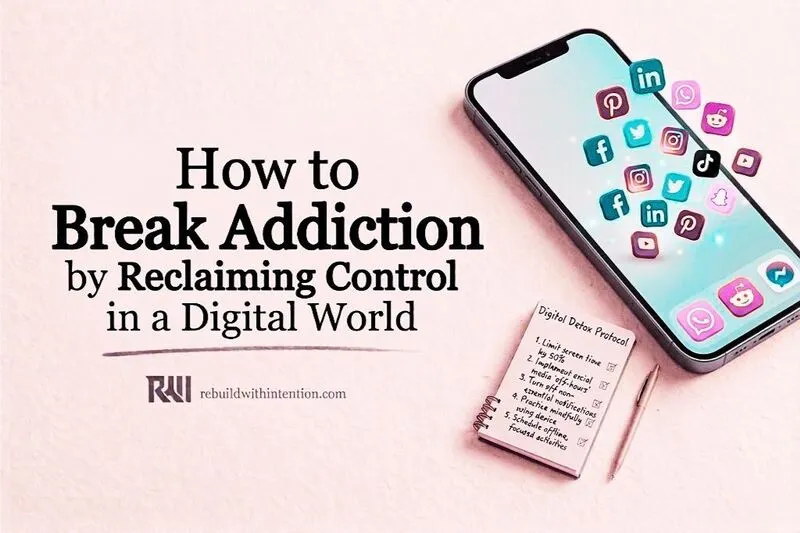
To successfully break addiction, you must shift your brain’s reliance from the external “wanting” dopamine system—fueled by digital consumption—to the internal “having” system. Real recovery means taking back control of your life by creating things on purpose, managing your emotions, and completing the tasks you set for yourself.
One of the deepest roots of our modern addiction stems from a complete inability to wield control over our own lives.
It takes until a child is at least ten to twelve years old to fully grasp the complex realities of whether a habit like pornography is fundamentally harmful.
Before reaching that cognitive milestone, they largely mimic what they see, absorbing their environment and accepting it as the norm.
As kids, society and our unmonitored environments normalized exposing us to explicit content at shockingly young ages.
They manipulated us into believing that these destructive behaviors were simply what happened behind every closed door.
We engaged in them just to feel a sense of belonging, to feel among the crowd.
But as we grow in age, a harsh reality sets in. We discover we are violently stuck and stagnant in a vicious cycle of addiction, completely unable to achieve our real purpose.
We hate our lives, and we hate the way we are living because we realize we have absolutely no control over our daily existence.
I mean, it is our own life, yet we have no say in its direction. Finally, we manage to identify the root cause of our misery, but then we just keep cycling.
We struggle to break free from an addiction that has taken several years to root deeply in our minds, transforming into an automatic, inescapable habit.
The only viable way we can ever break free is by violently taking back control of our lives. This does not mean focusing on the macroscopic things we cannot change.
It means focusing intensely on the micro-elements we can control. There is simply no way around that fundamental truth.
My Illusion of Automated Freedom

The system meticulously trained me to crave success and absolute financial freedom above all else. I chased that societal definition of success relentlessly, and eventually, I actually attained it.
I was young and ambitious, and I had discovered a backdoor method to make money as a blogger while I slept—a completely automated income stream.
But when that highly sought-after freedom finally arrived, I was entirely unprepared for it. I did not know what to do with my newfound time or how to mentally manage that level of unearned success. Eventually, exactly like the prodigal son, I squandered and lost it all.
Joy does not come from being free without doing anything; real joy comes from being active and working on things.
The main issue I had wasn’t the success I reached, but how I got there in a way that felt automated and mindless.
I wanted to be free, and I became free, but I started to wonder what I would actually do with all that free time.
Without a clear, intentional purpose, I was instantly caught in a familiar trap. I used that abundant free time to feed my deepest addictions, specifically PMO.
I didn’t have anything meaningful to do with my hands, and I had simply outsourced my daily struggle to an automated system.
I was drifting. I had no intention of selling that backdoor method or building a legacy; I just wanted the easy way out. But when you take the easy way out, you leave your mind entirely unguarded.
The Architecture of Our Dependency

One of the most important lessons to extract from my failure is the absolute necessity of environmental control.
Because we often lack this control ourselves, we must actively learn—and aggressively teach our kids—how to govern their surroundings.
We must intentionally guide what they see, so they don’t form destructive worldviews based on their own limited, immature understanding.
There is so much in this world we simply cannot control. Look at your most basic human needs versus the entities that actually control them.
A utility company dictates your access to water. Complex supply chains spread across five to fifteen countries control whether you have food on your table. A landlord or a large banking institution controls your shelter .
A distant power company controls your electricity, while an employer or a digital platform controls your financial stability. A fuel conglomerate or a municipal transit system controls your ability to move and travel.
A telecommunications company dictates exactly how and when you can talk to the people you love. An insurance corporation or a hospital board controls your access to health and vitality.
Most terrifyingly of all, a faceless algorithmic code controls exactly what you see, read, and believe every single day.
“It is deeply saddening that we cannot even control the information entering our own minds.”
That doesn’t even begin to touch on what the government controls, what radio syndicates control, what television networks control, or what Social Media and AI manipulate.
They actively limit your access to the objective truth and feed you carefully curated lies designed to keep you docile.
Now that nearly all social media platforms are directly paying “creators” and “influencers” to keep us hooked, the game has fundamentally changed.
These individuals will do absolutely anything and everything to keep you permanently plugged into the matrix.
They project fake lives, sell impossible fantasies, and utilize nudity—flashing their bodies just to hijack your attention and secure their paycheck.
They will go to terrifying lengths to keep you subservient. To them, you are just a follower. You are a fan. You are a digital soldier they can command at will.
A single follower is worth roughly $1 every single month to these platforms.
So, of course, you are nothing but another metric, another means of income to them, while you are continuously fed lies.
You will literally see thirty-year-old, forty-year-old, grown, married men proudly calling themselves “fans” of a teenage TikTok creator.
What genuine wisdom is there to learn from someone drastically younger and significantly less experienced than you are?
Many years ago, people proudly named and identified themselves by the tangible value they provided to society: Baker, Smith, Weaver, Carpenter.
Today, we tragically identify ourselves entirely by what we passively consume—brands, television shows, and influencers.
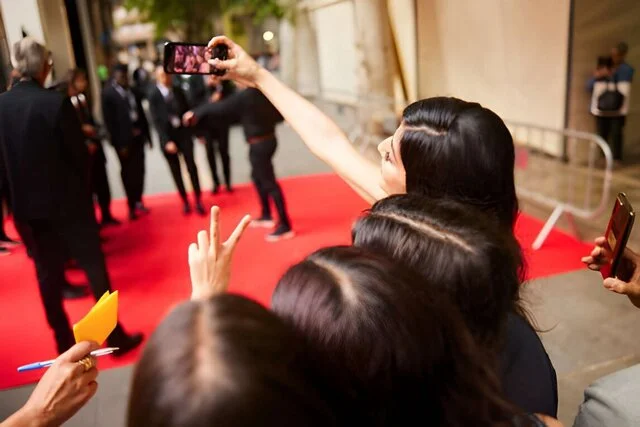
Today, we literally outsource everything that historically gave us dopamine naturally. We have traded the deep satisfaction of creation for the cheap thrill of consumption.
“Less dependency equals less anxiety. More dependency equals more anxiety.”
All behavioral addiction stems directly from what we consistently consume around us. Even in our local communities, people desperately crave cheap attention.
Giant corporations hire massive staff, pay them unlivable wages, and make them feel an artificial need to accumulate more money.
These employees work their entire adult lives and cannot even manage to save enough capital to build a basic shelter.
The only kind of staff that actually earn substantial wealth are those who generate 30x or 100x the money they are paid. These are rarely the full-time, punch-the-clock workers.
They are the elite builders of systems.
A company will gladly pay any astronomical amount as long as these builders can construct a system that generates a crazy return on investment (ROI).
One of these brilliant but misguided builders, Aza Raskin, invented what we now call “infinite scrolling.”
Because of that one single feature, over 200,000 dreams and lifetimes are entirely wasted every single day. He openly regrets ever creating it.
We are the victims of a system designed by geniuses to exploit our most basic psychological vulnerabilities.
The Illusion of Wealth as Control
When I discovered this devastating truth about the world, I knew I had to fundamentally change.
I realized that if I couldn’t control the massive systems around me, I should at least learn to meticulously control myself. I had to dictate exactly how I consciously chose to respond to this chaotic world.
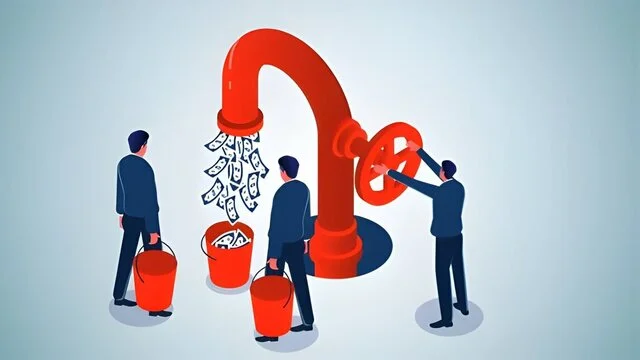
Many people mistakenly believe that money provides absolute control over everything. While wealth does offer leverage, money is ultimately still just a tool. It is exactly like the raw fuel you desperately need to keep a fire burning in the cold.
Unless you actually own the refinery, you will forever be forced to keep buying that fuel, in person, at the market rate.
You can make a staggering amount of money, buy sprawling houses, luxury cars, advanced electronics, and everything that makes life physically easier.
But here lies the uncomfortable truth: you still aren’t truly in control.
The global manufacturers of these luxury goods are the ones holding the actual power. They dictate the terms, they charge you recurring fees, and they remotely control exactly how you are permitted to use their product or service.
So, unless you are a primary inventor or actively working to become an inventor, you lack true autonomy even with the items you purchased with your own hard-earned cash.
However, there is a man who taught me that an individual absolutely can control everything in his immediate orbit. He taught me the vital importance of not being hopelessly dependent on a monetary system.
This man controls an astonishing 90% of his own basic human needs—he is a humble farmer from France named Samuel Lewis.
We constantly get furiously angry at things or geopolitical situations we have absolutely zero control over. But other than spiking our own blood pressure and getting angry, we have another choice.
We can pause, breathe, and intentionally choose exactly how we respond to that external stimulus.
True, unshakeable control starts entirely from within. That is exactly why it is universally called self-control.
We must first successfully control ourselves before we ever attempt to control any other external variable in our environment.
You must focus obsessively on what you can control so you can firmly establish a position of internal power.
Yes, you can achieve this powerful state of control even without massive amounts of money.
The Systems for Rebuilding Intention
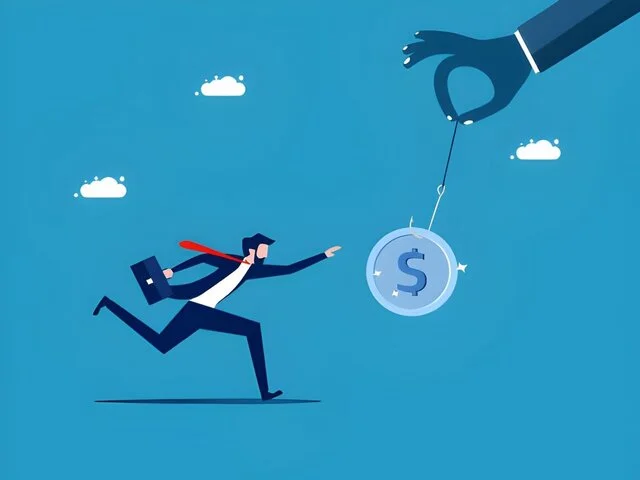
We keep hopelessly chasing things that never actually give us lasting satisfaction. To finally step out of this exhausting “Chase Trap,” you need to fundamentally rewire your daily operating system.
Here is the exact framework I use to reclaim my autonomy and rebuild my life with pure intention.
Interrogate Your “Chase”
Before you can build new systems, you must ruthlessly audit your current desires. The system has meticulously programmed you to want things you do not actually need.
Ask yourself these critical, uncomfortable questions:
- What do you actively work on that requires absolutely no money and that you will still wholly own tomorrow?
- When did you last physically finish something—taking it from a raw start to an absolute end—and hold the final result?
- How many real, physical people can you actually see the direct impact of your actions upon?
- What specific activities would you enthusiastically do even if absolutely nobody could ever see you doing them?
- What does the concept of “enough” actually look like in your life, versus what the consumer system artificially makes you want?
When I honestly answered these questions for myself, most of what I was desperately chasing instantly became irrelevant.
As a teacher currently without a massive audience, the simple act of writing is my absolute best option. Writing requires zero money, and even if my work is plagiarized or shared without credit, my soul knows it is still authentically mine.
As long as it helps someone out there wandering in the dark, it has immense value. Other than that, I frequently read my own writing to process my internal state.
Sometimes, it helps me so profoundly that I step back and wonder if I was the one who wrote it.
Master Your Two Dopamine Systems

Part of what makes us beautifully human is our complex array of emotions. I recently learned about the seven core emotions from Mindvalley, a fascinating Mystic brain hack I am currently exploring through deep meditation.
There are seven distinct types of moods biologically associated with specific molecules in our bodies.
- Dopamine: The motivational (Do-it-again) molecule
- Oxytocin: The Hug drug
- Norepinephrine: The attention enhancer
- Serotonin: The satisfaction molecule
- Nitric Oxide: The intensity powerhouse
- Beta-Endorphin: Body ecstasy
- Anandamide: The bliss molecule
For addiction recovery, I am focusing intensely on dopamine. This is the powerful emotion that makes us feel a profound sense of accomplishment and to do that thing again and again.
Sadly, it is also the fleeting mood we get immediately after a digital or physical release, which is almost always followed by crushing regret.
Our human brain actually possesses two entirely separate dopamine reward systems.
The first is the “wanting” system, which gives us a massive, anticipatory rush of excitement before we actually get something.
That anticipatory spike is exactly what makes us mindlessly click, endlessly scroll, and continuously seek out explicit content. This wanting system is the absolute root of our modern digital addiction.
The second is the “having” system. This system rewards you with a calm, deeply grounded satisfaction after you successfully finish something tangible, like cooking a meal, completing a meditation, writing an essay, building a shelf, or crafting art.
Modern apps, social platforms, and digital products are maliciously built to keep the “wanting” system firing constantly and aggressively.
They are simultaneously designed to ensure the “having” system never actually kicks in, leaving you permanently unfulfilled.
I was only able to stay free from my PMO addiction every single day because I learned to starve the wanting system and consistently harvest my dopamine from the having system.
When you sit in silence after a meditation session, you are manually shutting down the chase. You are telling your brain that you have arrived, you are safe, and you have enough.
Implement the Open-Closed Loop Framework
When I discovered the truth about these chemical pathways, I knew I had to architect a new way of living. I had to learn to control myself if I couldn’t control the chaotic digital world around me.
This realization is exactly where my foundational idea of the “open-close loop” I use in my weekend routine comes from. And that is exactly why I am presently focusing so much of my energy on the things I can directly control, rather than letting external forces control me.
And the beautiful truth is, it actually works. My brain desperately needs to feel this concrete sense of accomplishment.
To heal, your brain needs to regularly say, “Yeah. That’s mine. I did that.” You can achieve this by following this steps:
⦿ Identify the Open Loop: Recognize when a task, anxiety, or craving is hanging open in your mind, draining your passive energy.
⦿ Initiate Manual Action: Start a physical or creative task that requires your direct, uninterrupted intellectual or physical input.
⦿ Refuse Context Switching: Do not look at your phone, do not open a new tab, and do not pivot until the specific task is physically completed.
⦿ Close the Loop: Step back, look at the finished product, and consciously allow your brain to absorb the “having” dopamine reward.
Reclaim Your Intellect in the AI Era
It is deeply saddening how quickly and unquestioningly we incorporate Artificial Intelligence into our day-to-day lifestyles.
We are reaching a terrifying point where we no longer feel the biological need to utilize our own intellect. I once attempted to write an entire blog post using AI sometime last week, just to test the waters.
When it was finished, I felt absolutely no sense of accomplishment or pride because I hadn’t actually written it myself.
I had felt at ease using AI in the past for minor tasks. I still use it today, but I strictly forbid it from touching the creative process.
I write the raw, human thoughts, and the AI simply edits the basic grammar for me, acting strictly as an assistant, exactly as it should be.
AI was fundamentally designed to be a helpful assistant to humanity. But look around today; nearly 80% of humans are functionally acting as assistants to the AI.
We are literally feeding these massive language models with our collective human intelligence every single day.
We are aggressively training them, ensuring that these robots become increasingly more human. At the same time, we simultaneously devolve into mindless, consuming robots.
Every single piece of modern technology is marketed as a tool to make life easier and save us time.
But that saved time is rarely for our own benefit; it is for the ultimate benefit of those who invented the platforms. Because to truly enjoy the full, unbridled capacity of this artificial intelligence, you have to pay them a recurring monthly subscription.
I have no inherent problem with capitalism or paying for tools. But we must maintain absolute, unwavering awareness of what we are trading our autonomy for.
Rebuilding With Intention

I don’t know if this reality is ultimately sad or not; sometimes, I cannot fully process that specific feeling. But the undeniable fact that we can carefully control how people respect us is unfathomable.
When you have money, people respect you and place themselves at your mercy, offering you temporary love and transactional attention. Even people who are not directly related to you will desperately want to associate with your success.
But the moment you face a severe life challenge or lose that wealth, everyone instantly disappears, and you are left completely alone in the dark.
So, in the end, we don’t even have true control over other people, except perhaps those rare few who unconditionally choose us.
Other than what you can physically build and control with your own two hands, you can also learn to master your internal feelings. You can absolutely control your sudden urges.
You can set a firm, unyielding goal to control your immediate environment by remaining hyper-aware of everything functioning around you.
You can choose to rebuild your life with pure intention. You can choose to live with a definitive purpose. You can consciously decide to step away from the crowd and become a creator, a builder, an architect of your own reality.
You must desperately want to minimize what you blindly outsource in this modern era of hyper-technology and Artificial Intelligence. Vow to use your own natural intellect.
Ruthlessly minimize your daily digital consumption.
Force yourself to create something entirely new every single day, no matter how small or insignificant it may seem. Document your raw process.
All of these intentional actions forcefully place you back into a position of absolute control and provide a deeply rooted sense of lasting accomplishment. It creates the perfect open-close loop, and you can see the clear results of what you have worked hard on.
Stop depending on others for your happiness, stop feeding the wanting system, and start building a life you actually own.
Discover more from Rebuild With Intention
Subscribe to get the latest posts sent to your email.