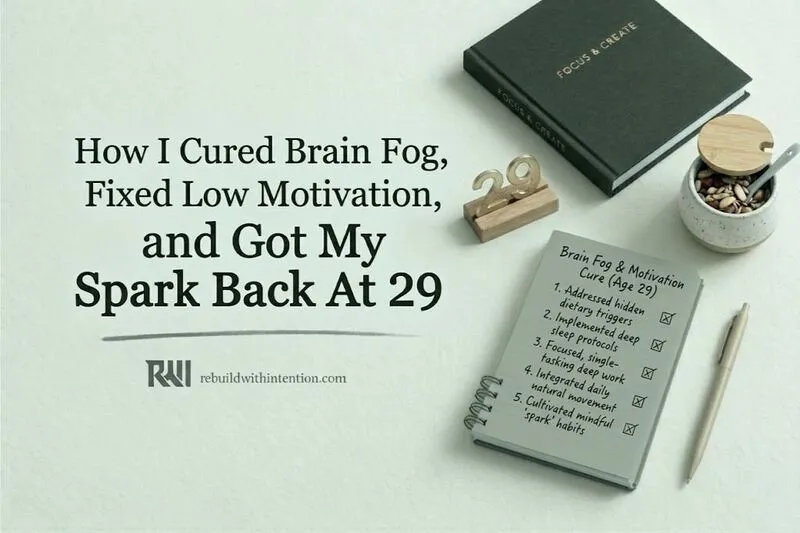
I just turned 29 years old. Most people celebrate a birthday like that, but for me, it felt like waking up from a 10-year coma.
Working my standard 6-4 PM job here in Lagos, I would navigate the crazy traffic, come home completely drained, and have absolutely zero energy to build the life I knew I was capable of. I thought I was just burnt out from the daily hustle. I thought maybe my diet was wrong, or maybe I was just naturally lazy and unmotivated.
It took me years to realize that my exhaustion, my intense social anxiety, and the heavy “brain fog” I walked around with weren’t character flaws. They were the symptoms of a quiet, hidden habit I was doing behind closed doors.
On February 4, 2026, I wrote in my journal: “Thank God that today, I stopped digging and will rebuild my grave.” That was the day I decided to break my 10-year cycle of adult entertainment and cheap dopamine.
If you are reading this and feeling dead inside, constantly wondering where your “spark” went, I want you to know you aren’t alone. Millions of guys are suffering in silence.
We don’t realize our daily screen habits are the problem. Instead, we go online, panicking, searching for medical reasons why our lives feel so heavy.
The truth is, to fix brain fog and low motivation caused by digital overload, you must reset your dopamine baseline. This requires a 30 to 90-day detox from digital super-stimuli, controlling your environment by deleting infinite-scroll apps, managing emotional triggers, and replacing screen time with physical routines like early morning exercise and journaling.
Here is what is actually happening to your brain, and the exact system I am using to get my life back..
We Search for Symptoms, Not Cures
When you are trapped in this cycle, you usually don’t realize you are hooked. Because spending hours staring at screens and highly stimulating content is so “normal” today, we don’t connect our bad habits to how terrible we feel.
Instead, we scour places like Reddit or Quora trying to self-diagnose our sudden lack of energy.
We search for things like: “Why am I always tired?” or “Why can’t I focus on anything?” We think we have adult-onset ADHD. We buy expensive vitamins thinking we have a nutritional deficiency.
We are a massive demographic of guys in real pain, totally blind to the fact that our screen habits are the exact root of our suffering.
The Hidden Symptoms (Why You Feel Like a Zombie)

To understand why you feel so numb, you have to understand dopamine. It is the chemical in your brain that drives motivation and pleasure.
When you view endlessly new, highly stimulating adult content, your brain gets flooded with massive, unnatural surges of dopamine.
To protect itself from that flood, your brain actually shuts down its pleasure receptors. When you close the laptop and step back into the real world, you are left in a massive dopamine deficit.
Here is what that looks like in real life:
1. Thick Brain Fog:
Everyday activities stop feeling rewarding. You feel cloudy, sluggish, and can’t focus on simple tasks. For me, trying to learn Data Analysis after work felt impossible. My brain simply wouldn’t absorb the information.
2. Zero Motivation:
Why put in the hard work to build a business, learn a skill, or go to the gym when you can get a massive rush of pleasure just by staring at your phone? You lose your drive and abandon your goals for the path of least resistance.
You just feel “flat.”
3. Panic and No Eye Contact:
This habit is isolating and built on secrecy. The secret you carry builds an immense psychological burden.
It gets so bad that just looking another person in the eye triggers pure panic—your heart rate spikes and you physically want to look away because you feel like they can see your shame.
4. Numbness in Real Relationships:
Your brain gets wired to crave endless new faces on a screen. Because of this, real, loving relationships start to feel boring.
You might even lose your physical drive entirely with a real partner, searching online and asking, “Why am I not attracted to my partner anymore?”
You blame the relationship or your testosterone levels instead of your screen habits.
The Exhausting Guilt Loop
At the core of all this is an exhausting internal battle. It is a vicious cycle.
You get the urge, you watch the content, you get a brief moment of relief, and then—the second you close the tabs—you are hit with crushing, debilitating shame. You look in the mirror and hate what you are doing.
But that intense anxiety makes you feel terrible, which eventually drives you right back to the screen to escape the pain. You might even catch yourself Googling, “Is it normal to do this 5 times a day?”
Let’s be real: you aren’t actually looking for health advice; you are just begging the internet for an excuse to keep going without feeling guilty.
How I Fixed My Dopamine and Got My Life Back
If you see yourself in these patterns, you need to know you aren’t permanently broken. Your brain is just exhausted from being flooded.
For me, breaking a 10-year cycle meant I couldn’t take shortcuts anymore. I had to build an entirely new framework for my life to let my brain heal.
It’s not a quick fix, but here is exactly the system I am using to rebuild:
1. Rejecting the Dopamine Shortcut:
Figuring out Maslow’s hierarchy of needs opened my eyes.
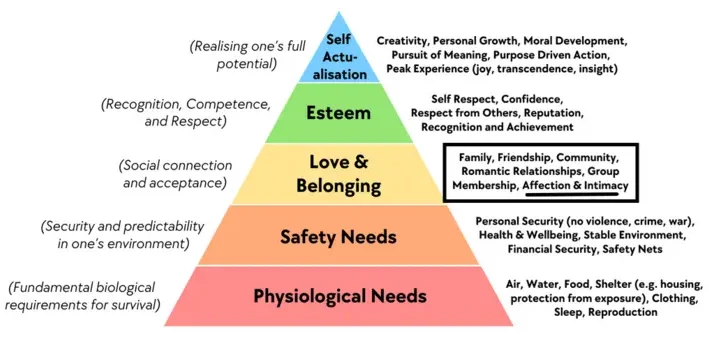
Adult content makes me feel like I’m fulfilling my deep needs, but it’s really just a shortcut.
Learning that it causes bigger and longer feelings of pleasure than real intimacy helped me remember why staying away from it feels so hard right now. My brain is just getting back to normal.
2. Controlling My Environment (One Day at a Time):
I am conscious at all times. I turned off my mobile data and deleted social media to remove my usual cues. I even limit my YouTube watch hour to less than 1 hour (if I have to watch it).
I gave myself space to actually feel bored, which pushed me to read.
What I was doing is avoiding “infinite scroll” apps at all costs; they are an absolute minefield for the recovering mind.
I realized that implementing preventive measures is much more effective than depending solely on willpower; if I never open the door, I won’t have to struggle with the temptation to walk through it.
3. Identifying My Triggers:
Writing things down revealed patterns—like how feelings of isolation and boredom heightened my cravings.
By identifying these triggers and removing them, I took proactive steps. When I don’t scroll, my brain stops expecting dopamine hits and eventually stops craving them.
4. The H.A.L.T. System:
Whenever I feel a sudden urge to relapse, I stop and check myself: Am I Hungry, Angry, Lonely, or Tired? Then I fix the physical or emotional root cause first, and the urge will almost always reset.
5. The Power of Completion:
I don’t overstress my brain right now. When stress kicks in, my brain naturally seeks its old shortcut to de-stress.
Instead, I do something physical that I can finish. Like cooking my meal, tidying the house, or writing by hand. Engaging in offline hobbies gives me a genuine sense of accomplishment every time I finish a task.
6. The 4 A.M. Routine and Sleep:
I realized I couldn’t build my future when I was exhausted after work. I forced myself to stick to a bedtime, cut out caffeine late in the day, and started waking up at 4 a.m.
This gives me the edge to exercise, journal, and practice my new skills when my energy is at its peak. Plus, cutting stimulants ensures I get the REM sleep needed to process my emotions.
7. Journaling & Public Accountability:
My brain can no longer retain everything, so I write it down to organize thoughts that might otherwise be chaotic.
When I lost my job and my phone on the exact same day, journaling was the only thing that kept me from spiraling. I also keep a public journal on a forum to stay accountable every single day.
Writing it down makes the struggle real and manageable, and reading comments from guys on the same journey lifts the shame.
The spark doesn’t just magically return overnight. It comes back slowly, day by day, as your brain heals and you learn to embrace the natural effort of real life again.
You are not a failure. It is time to stop taking the shortcut. Put the phone down, stop digging, and let’s start rebuilding together.
Discover more from Rebuild With Intention
Subscribe to get the latest posts sent to your email.