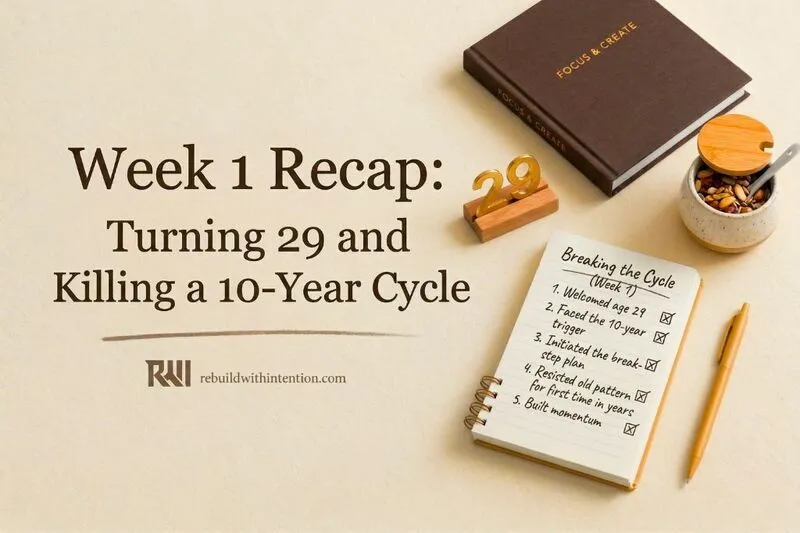
March 15 was not just another birthday for me—it was the day I understood I was going to turn 29 and realized my twenties were almost over.
I started thinking about the last ten years, which were full of dreams I still hadn’t reached, increasing debts, and a bad habit that had slowly taken over my life.
For years, I kept telling myself that I would change once I got married or after I got my finances in order. I truly believed that once life calmed down, everything would fall into place.
But as soon as I blew out the candles, I made a promise to myself-no more excuses and no more giving in to my unhealthy habit. Recognizing this promise helped me stay committed and motivated throughout my recovery journey.
I wanted to turn 30 with a clear mind, stronger willpower, and an intentional plan to live, not just exist.
I didn’t discover the supportive NoFap community until Day 2 of my journey, but the promise I made to myself on Day 1 was the spark that changed everything.
Here’s a straightforward reflection on my first week of a personal challenge.
This is a true story about what helped me, what didn’t work, what made me feel upset, and the habits, feelings, and urges I had along the way.
The lessons I learned this week are not just about stopping PMO; they are about taking back my time, feeling better about myself, and creating a routine that I can keep.
Sharing this journey will inspire you to believe change is possible and motivate you to start your own path.
If you have ever felt like you are stuck in a bad cycle or wondered if making small changes could really make a difference in your life, then make sure you read till the end.
Day 2: A Vow to Stop Hiding

I signed up on the forum on Day 2 and introduced myself to the community and shared my story. For years, I thought I was alone.
When I was 14 years old, I discovered some inappropriate videos on a family member’s memory card. This experience opened a new world for me that I wasn’t ready for, and it set a pattern I found hard to stop.
By the time I was 23, my habit had become stronger. I remember a moment when I saw an image that triggered a massive dopamine hit—it’s the first time I experienced such strong pleasure.
I spent the next several years chasing that same feeling, spiraling further into the habit, which made me realize how addictive behaviors can take hold and distort our perceptions.
Even when I was the coordinator for evangelism at my university, I was living a double life. I made excuses for my habit, telling myself it was “normal” for an adult and that it would all magically end once I found a serious relationship.
On Day 2 of my journey, I shared this story. I felt like my dreams were on hold, and my life was just about meeting basic needs.
I graduated with a degree in Business Administration and used to have a blog, but now I am struggling with debt. I felt like my only goal was to “survive.”
Reading about other people’s experiences made me understand that I wasn’t alone. That day, I decided to set a goal for the next 365 days: to stop PMO, regain my willpower, and aim for bigger dreams.
I wanted to make my first $10,000, find a job that mattered to me, and fall back in love with writing.
By publicly sharing that promise, I felt a sense of responsibility to keep it. I learned that journaling can help me better understand myself and express my feelings.
Writing about my challenges was the first step I took toward recovery.
Day 3: When “Harmless” Keywords Aren’t Harmless

By Day 3, I felt raw determination, yet I almost relapsed without realizing it.
I recently started learning to crochet and wanted to create a blog about it. To get ideas, I used Pinterest.
While looking for keywords, I came across “crochet bikinis.” This caught my attention, and before I knew it, I spent three hours looking at bikini pictures.
I even found a funny corn website by mistake before realizing how much time I wasted. This made me realize I should be careful with the search terms I use—they can lead me to unexpected things!
That evening, I identified another triggers:
- Explicit or suggestive keywords: Even innocuous‑seeming words like “bikini” can send me into a rabbit hole.
- Isolation and mindless scrolling: Spending more than two hours alone online leaves my guard down.
- Extreme stress: When problems pile up, and I feel overwhelmed, I seek escape.
Triggers aren’t unique to me. Even research shows that people recovering from pornography addiction often experience relapse because they encounter emotional, environmental, or habitual triggers.
- Emotional triggers include feelings like sadness, anxiety, thinking you are not good enough, etc.
- Environmental triggers are people, places, or devices that remind you of past explicit content use.
- And Behavioral triggers are habits, like looking at certain things online at specific times.
I found that noticing my triggers early and deleting saved items on Pinterest helped me a lot and kept me from going back to bad habits.
I also chose to stop using social media for a while until I could control how much I used it, because these platforms show more and more suggestive content to keep us engaged.
Day 4: Standing Guard at the Door of My Heart
On Day 4, I didn’t change the world, but I did guard my mind. After a long day at a job that didn’t pay well and involved helping customers, I found myself wanting to write. Writing helped me feel better and clear my mind.
When I got home, I felt very tired and couldn’t concentrate, which made me feel upset. Instead of wasting time on social media or just thinking about random things, I chose to really notice everything around me.
I looked for things like car ads or bright billboards, hoping they would give me new ideas and stay in my mind.
Our brains don’t judge the pictures we look at; they just save them and bring them back when we aren’t thinking about anything else.
Day 5: A Small, Uneventful Win
Day 5’s journal entry was short and simple: “All good.” At first glance, it might seem like nothing noteworthy happened, but that’s precisely why it holds significance.
On Day 5, I faced no strong urges, triggers, or major realizations. I focused on living with intention and made a note of it.
Day 6: Clarity From Cutting Distractions
By Day 6, I hit a wall I’ve been staring at for seven years: analysis paralysis.
My dreams—making $10,000 online and breaking free from poverty—always felt out of reach because I was constantly chasing the “perfect” niche instead of just starting.
I decided to try something radical. I turned off my mobile data, cutting out every ping, notification, and temptation to scroll. In that sudden silence, I felt an intense boredom. With no other options, I finally opened the books I’d downloaded months ago.
Within hours, the fog lifted. I gained a level of clarity I haven’t had in years. I realized I don’t need to “find” a niche—I need to document my journey.
I decided to stop overthinking and start testing. I published a “Minimum Viable Post” to see if sharing my recovery and the skills I’ve learned could help others.
I no longer feel like I’m waiting for motivation to strike. My “why” is finally strong enough to carry me.
My focus for the next 359 days is now razor-sharp:
- Avoid PMO like a deadly disease.
- Make my first $10,000.
No more overthinking. I’m just going to start documenting.
Day 7: Realizing How Long I’ve Been on the Wrong Track

Day 7 was my first full week—seven days of living with purpose. While looking through some old notebooks, I found a note from my graduation in 2022 that really made me think.
I realized that I have been trying to make money online since 2016. After almost ten years, I should have built something important—maybe even earned $100,000—if I had focused on one path instead of always looking for easy ways to succeed.
I kept telling myself that I would start doing things the right way once I paid off my debts; this way of thinking only made my debts worse. Now, I owe millions of naira.
The lesson here wasn’t to wallow in regret but to adapt. Humans adapt to whatever situation we put ourselves in. If we justify being stuck, we remain stuck.
By staying in jobs I hated and numbing myself with PMO, I conditioned my subconscious to accept mediocrity.
Journaling helped me recognize this pattern.
In my reflection for Day 7, I expressed my gratitude for the good habits I’ve developed. I stopped watching P, cut out movies, quit playing games, limited my YouTube time to less than one hour each day, started reading more, and made the important choice to change my life.
I want to turn my life around before I turn 30. I know that I can’t keep jumping from one quick solution to another.
I will stay dedicated to a single path until I achieve the results I desire.
What Worked for me in Week 1
1. Journaling and self‑reflection
Writing on a daily basis helps you organize your thoughts that might otherwise be chaotic and overwhelming.
Looking back over my entries revealed patterns—like how feelings of isolation and boredom heightened my cravings—allowing me to tweak my surroundings as needed.
2. Identifying triggers
Understanding that certain keywords trigger my cravings gave me a sense of control. It’s best to identify these triggers—whether emotional, environmental, or habitual—as a vital strategy for avoiding relapse.
By removing saved “bikini” pins and staying away from social media, I took proactive steps to prevent a potential setback.
I realized that implementing preventive measures is much more effective than depending solely on willpower; if I never open the door, I won’t have to struggle with the temptation to walk through it.
3. Controlling the environment
Turning off mobile data, deleting social media, and limiting YouTube removed many cues associated with PMO.
Habit research shows that controlling your environment by not encountering triggers makes breaking unwanted habits easier.
When I don’t scroll, my brain stops expecting dopamine hits and eventually stops craving them.
4. Establishing routines
I began exploring various morning routines by waking up at 4 a.m. to focus on exercise, journaling, and learning. Although I hadn’t yet established a consistent schedule, this structure provided a solid foundation.
But repeating these activities in the same context, my goal was to make positive habits automatic. Exercising in the morning also helped improve my mood.
5. Joining Community
When I almost relapsed on Day 3, reading posts from fellow fapstronauts helped me stay strong.
Having social support can really ease cravings and lift feelings of shame. A simple message like “Keep going, bro!” reminded me that I wasn’t alone and helped strengthen my determination.
What Failed or Challenged Me
1. Underestimating “harmless” triggers
As a blogger, conducting keyword research is a crucial step before drafting a post. I used to think that searching for terms like “crochet bikinis” was safe since it pertained to my blog topic.
After all, I was looking for inspiration for my writing. However, I’ve encountered a number of bizarre keywords in the past as well.
This experience has taught me that even seemingly harmless searches can lead to unexpected places—explicit content triggers can hide behind innocuous queries.
It made me realize the importance of questioning whether a search is truly necessary or if my curiosity is just a veiled craving.
2. Overloading myself with goals
For years, I pursued multiple schemes simultaneously—blogging, freelancing, and different side hustles. Even in recovery, I felt tempted to find the perfect niche to make quick money.
This created analysis paralysis, delaying action. Day 6’s decision to focus on just two powerful goals—avoiding PMO and earning my first $10,000—clarified my path and fueled my determination.
3. Relying solely on willpower
At first, I thought that sheer willpower would be enough to prevent me from relapsing, but by Day 3, it became clear that willpower can easily wane when faced with triggers.
It turned out that strengthening my environment and establishing solid routines was far more effective than simply trying to tough it out.
4. Ignoring my body’s needs
Working long hours and staying up late made me very tired, which made it harder to resist cravings. Exercise and sleep are important for staying healthy: when I exercise, it helps lift my mood and reduces feelings of anxiety.
Getting enough sleep also helps me think clearly and make better decisions. On nights when I don’t sleep well, it’s harder for me to stay strong and not give in to sexual urges.
I have now made it a habit to go to bed by 11 p.m. so I can get better sleep.
Key Lessons for Anyone Starting Their Own Reset
1. Name Your Why and Write It Down.
When you really want to give in to cravings, remembering your reasons can help you stay strong. For me, my reason is more important than just keeping a record of my progress; it’s about changing my family’s history of struggling with money and living with intention.
Writing down your reasons and progress feels good and has been proven helpful. Regularly writing in a journal can help you notice what makes you feel certain ways, understand your feelings better, and stay accountable for your choices.
2. Identify and Avoid Triggers Early.
Take a day to write down everything that makes you want to slip back into old habits. These can be feelings like stress or loneliness, places like certain websites or apps, or habits like looking at your phone after work.
After you write them down, think about ways to stop them.
You can use tools to block websites, plan fun activities for times when you usually feel tempted, or use your devices in public places.
It is better to stop these triggers before they happen than to rely on your willpower.
3. Control Your Environment.
If your phone serves as a gateway to your addiction, consider turning off notifications or keeping it in another room during times when you’re most vulnerable. Managing these triggers is one of the simplest ways to break unwanted habits.
For instance, when I took a break from social media, I no longer found myself accidentally encountering provocative images.
By removing games and movies from my devices, I found that boredom pushed me towards activities like reading or writing instead.
4. Build a Routine Around Healthy Habits.
Starting your day with a morning routine sets a strong foundation before distractions take over. Exercising for just 10 to 20 minutes can make you feel happier because it helps your body release special chemicals called endorphins.
Combine your workouts with journaling or meditation for added benefits. As you consistently practice these activities in the same setting, they gradually become ingrained habits.
Keep your routine stupid simple enough to stick with it, even on challenging days.
5. Join a Community and Ask for Help.
Shame grows when we keep it to ourselves. Talking about our problems with people we trust—like friends or online groups—helps us feel connected and responsible.
When I shared my worries about almost giving in to my old habits, I was encouraged. And that is what counts.
6. Accept Setbacks Without Quitting.
Building new habits is not always a straight path. Researchers at UCL discovered that if you miss a chance to practice your new habit, it doesn’t mean you’ve failed.
What’s more important is being consistent over time. If you make a mistake, think of it as information. Figure out what caused you to slip and change your surroundings to help you.
Being hard on yourself can lead to feeling ashamed and make it easier to fall back into old habits. Focus on progress, not perfection.
7. Replace Artificial Dopamine with Real Accomplishments.
Pornography hijacks the brain’s reward system. It triggers unnaturally high and sustained dopamine spikes—higher than food, nicotine, or even natural sexual experiences.
As time goes on, your brain can get used to things that are very exciting and may start needing even stronger things to feel good. That’s why using things like PMO can leave you feeling empty afterward.
Instead of looking for quick fun from social media or TikTok, try to focus on achieving real goals. You could write a blog post, finish a workout, or learn something new.
The happiness from working hard might take a little longer to feel, but it is more satisfying and helps you feel better about yourself.
Moving Forward
In the first week, I learned that real change begins not with big, bold steps, but with small, thoughtful choices.
When I turned 29, I had to think about my life so far and what kind of story I wanted for my 30s.
By writing every day, paying attention to what upset me, changing my environment, and establishing simple routines, I built a strong foundation for improvement and growth.
There are times I craved pleasure, but I also experienced moments of clear understanding, thankfulness, and small victories.
If you are reading this and thinking about making a change in your life—maybe you want to stop PMO, or any habit that steals your time—remember that you don’t need to know everything right now.
Start by making one choice: think about why you want to change. Write it down, create a daily plan to help you, and set up your surroundings to support your decision. Seek community, celebrate small wins, and learn from setbacks.
By the end of Week 1, I realized that I had more power over my life than I’d believed.
I’m still facing debt, uncertainty, and long work hours, but my mental health and sense of purpose have begun to return. I will not let an algorithm or an addiction dictate and control my future.
Together, let’s rebuild our lives with intention and purpose.
Share this post with someone who needs to see that it’s possible to start over at 29 (or 39 or 59).
The next chapter starts today.