Quick Answer
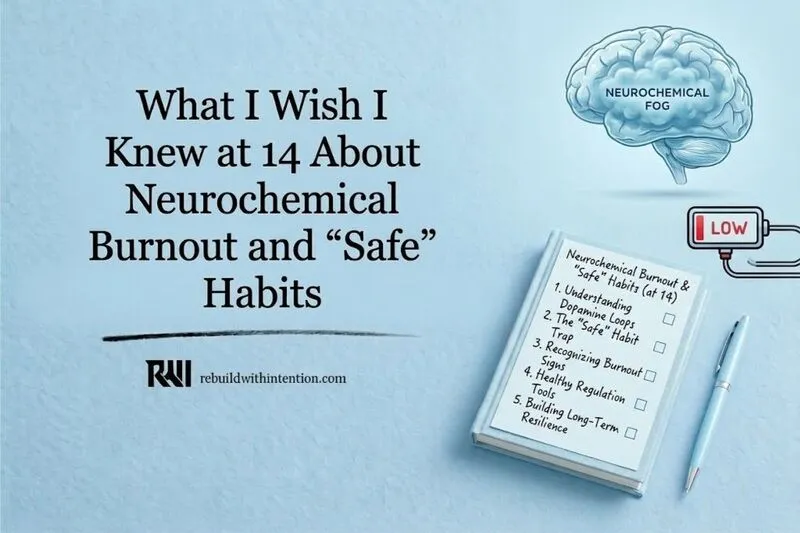
Is it safe to masturbate 10-20 times a day? While medical resources often state that masturbation is a normal physical activity, doing it compulsively (multiple times a day) can lead to severe psychological and neurochemical burnout. Compulsive habits flood the developing teenage brain with unnatural levels of dopamine, leading to long-term issues with motivation, focus, social isolation, and productivity.
The “Is It Safe?” Trap
When you type a question like, “I’m 14 and masturbate 10-20 times a day, is it safe?” into Google, you usually aren’t looking for a biology lesson. You are looking for permission.
You want the internet to tell you that this habit is harmless, so you can continue doing it without guilt. You might even find articles saying it is physically “normal.” But there is a massive gap between what is physically survivable and what is psychologically destructive.
Here is what I wish someone had told me before I lost years of my life to a habit I thought was “safe,” so you can feel hopeful about changing your future.
The Accidental Trap
My exposure started innocently enough. As a kid, I loved action movies and video games. I consumed them back-to-back, completely unaware that I was training my brain to constantly seek out high-level stimulation.
Because of this constant digital exposure, I accidentally stumbled upon explicit content at a very young age. I didn’t even know what porn was at the time. I just saw a few videos that triggered a massive rush in my brain, and I wanted to feel it again.
I thought I was just having fun. I had a naturally high retention memory, so I didn’t even need to study to pass my exams. I would grasp concepts the first time I saw them, which allowed me to coast into high school without much effort.
Because my grades were fine, no one noticed the silent damage happening in my brain. I was spending massive amounts of my neurochemical reserves, and I had no one to warn me about the incoming crash.
The Illusion of the “Harmless” Habit
When you start engaging in compulsive behaviors—especially sexual ones—your brain creates incredibly convincing lies to justify it.
At first, you think you aren’t losing anything. You believe it’s just a way to feel good and relieve stress. You might even convince yourself that it’s smarter and safer to just satisfy yourself rather than deal with the complexities of dating or socializing.
It is a trap.
Every time you engage in that habit, you are flooding your brain with intense, unnatural spikes of dopamine. Over time, your brain adapts. It dials back its natural receptors to handle the flood.
Suddenly, normal life feels exhausting and grey. You stop hanging out with friends because real-life interactions don’t give you the same chemical rush. You develop social anxiety because your brain prefers the predictable safety of your bedroom over the unpredictability of the real world.
Hitting the Wall: Neurochemical Burnout
The natural advantages I had as a kid eventually ran out. By the time I hit high school, the burnout set in.
No child is born with an inability to focus, zero motivation, or chronic emptiness. These are the side effects of neurochemical exhaustion. The compounding effect of draining your dopamine day after day, year after year, eventually leaves you completely hollow.
I clearly remember sitting at my desk during my first year of high school. I was looking at a simple assignment, but it felt very hard. What used to take me ten minutes to understand now felt like a big challenge.
I would read the same paragraph five times, but still didn’t understand anything. My mind wanted the fast, exciting information it was used to, and didn’t want to deal with the slow, boring work of studying.
I started zoning out during conversations, living with a constant, heavy brain fog. The sharp memory that had carried me through my early years was gone. I wasn’t just being lazy; my neurochemistry was completely bankrupt.
Doing something 5 or 10 times a day is fine because your body can physically handle it. But mentally, it is tearing down the scaffolding of your future. You are building a brain that is entirely dependent on instant, unearned gratification.
The Heavy Cost of Compulsion
Ask me how I know. I have been exactly where you are.
If I had someone sit me down at 14 and explain neurochemical burnout, my life would look drastically different today. Despite having a highly creative brain and massive goals, masturbating every day for over five years rendered me completely unproductive. It trapped me in my own head.
Instead of working on my ideas, all I could do was lie there and think about them. I felt no energy or motivation to make something real. I traded my ability to create for just a few moments of quick pleasure.
Today, I am putting the pieces back together and building my future through my platform, Rebuild With Intention. But the hard truth is this: if I hadn’t fallen into this trap, I might be running a massive company right now instead of just recovering my lost potential.
What to Expect When You Stop (The Flatline)
If you are reading this and deciding to quit today, you need to know what happens next. It will not feel instantly amazing.
When you remove the massive dopamine spikes your brain is used to, you will enter a phase commonly called the “flatline.” During this time, your brain is starved of its usual fix. You might feel even more tired, unmotivated, or emotionally numb than you did before.
This is the exact moment most teenagers relapse. Remember, pushing through the flatline shows your resilience and commitment to recovery.
The Solution: Retraining with “Earned” Dopamine
If you want to escape this trap, understand this: you cannot just delete a bad habit; you have to replace it.
Right now, your brain expects massive dopamine spikes for doing absolutely zero work. To fix this, you have to retrain your brain to appreciate “earned” dopamine. In the early stages of recovery, you don’t need to suddenly launch a business or study for ten hours a day. You just need a system to rebuild your baseline.
The most effective replacement strategy is a simple, non-negotiable daily checklist.
Start with micro-habits that require physical or mental effort but take less than ten minutes. Make your bed perfectly. Do 20 pushups the moment you wake up. Read just five pages of a physical book. When you physically check those boxes off your list, your brain registers a small, healthy hit of dopamine based on actual accomplishment.
By stacking these small, earned wins every single day, you slowly repair your dopamine receptors. You will gradually start finding joy and motivation in doing hard things again, effectively building your future, one small habit at a time.
Rebuild Your Brain Before 20
To the 14-year-old reading this: Your habits right now are literally building the physical structure of the brain you will rely on in your twenties.
Do not trade your future for a quick escape today. Stop searching the internet for permission to stay stuck in a destructive cycle. The compound effect is real, and the bill always comes due.
Let go of the habits that stop you from moving forward, even if it feels hard at first. Give yourself time to heal and start making positive changes in your life. You will need that strength to achieve the amazing things you are meant to.